Category Archives: Six Visions

Showing March 4 – March 28, 2021 at the State Of the Art Gallery in Ithaca.

Revisiting a “Vision” from some time ago…

For my part of the members’ show “Six Visions,” I’ve chosen some canvases that have been in storage for decades—work I did in the 70’s when I was in my 20s. I liked acrylic paint, and painted quite a few minimalist hard edge pieces with large areas of flat color. Gradually I became interested in gradations of colors of close value. How close could the hues be, and still the shapes be discerned? I did several large paintings exploring this question, two of which are in this show, “Machine in Field,” and “The Curtains in the House of the Metaphysician.”

To paint a gradation in acrylics one has to work quickly; there is no time to worry about edges. So I began to use masking tape to define the areas to be painted. I would place a piece of tape on a glass sheet and carve the shape I needed with a knife, then transfer the tape to the canvas, which was not stretched on a stretcher at this point, but on a piece of plywood so I could work on a hard surface and really press the tape down with my thumbnail.

It’s a thrill “pulling” a gradation across a large canvas with a large house painting brush, going rapidly back and forth, wiping the brush and dipping in new paint of the alternate color at each edge of the area to be covered, rapidly moving back across, wiping, dipping and brushing up and down across the surface again and again until it looks blended. This happens quite quickly—one minute it’s a streaky uneven blend, and the next, suddenly, it’s like light falling on velvet. It’s an exhilarating, and a very physical process on a large canvas—one has to be in shape for it. The acrylic paint dries quickly and sometimes I would resort to spraying the canvas with water to keep it wet enough. Then the paint must dry, and the whole process repeated again before removing the tape. Usually three coats were required.

I continued to paint in this style off and on for about ten years. The later paintings have much greater value differences, and a larger range of color in the gradations. Three are in this show, “Cave Light,” “Wings 2,” and “Wings 3”

With the advent of computers in the 80s, and the ease of blending gradations with the flick of the mouse, I stopped making these time-intensive works. But there is something quite wonderful about the tiny raised ridges between areas, formed by the paint building up agains the tape, and the way the paint is uneven in subtle ways that don’t happen digitally, even when a digital image is printed on canvas. It’s fun to see these paintings once again after years of digital work, and to recall the enjoyment of the process.
Photographic Abstractions in Black and White

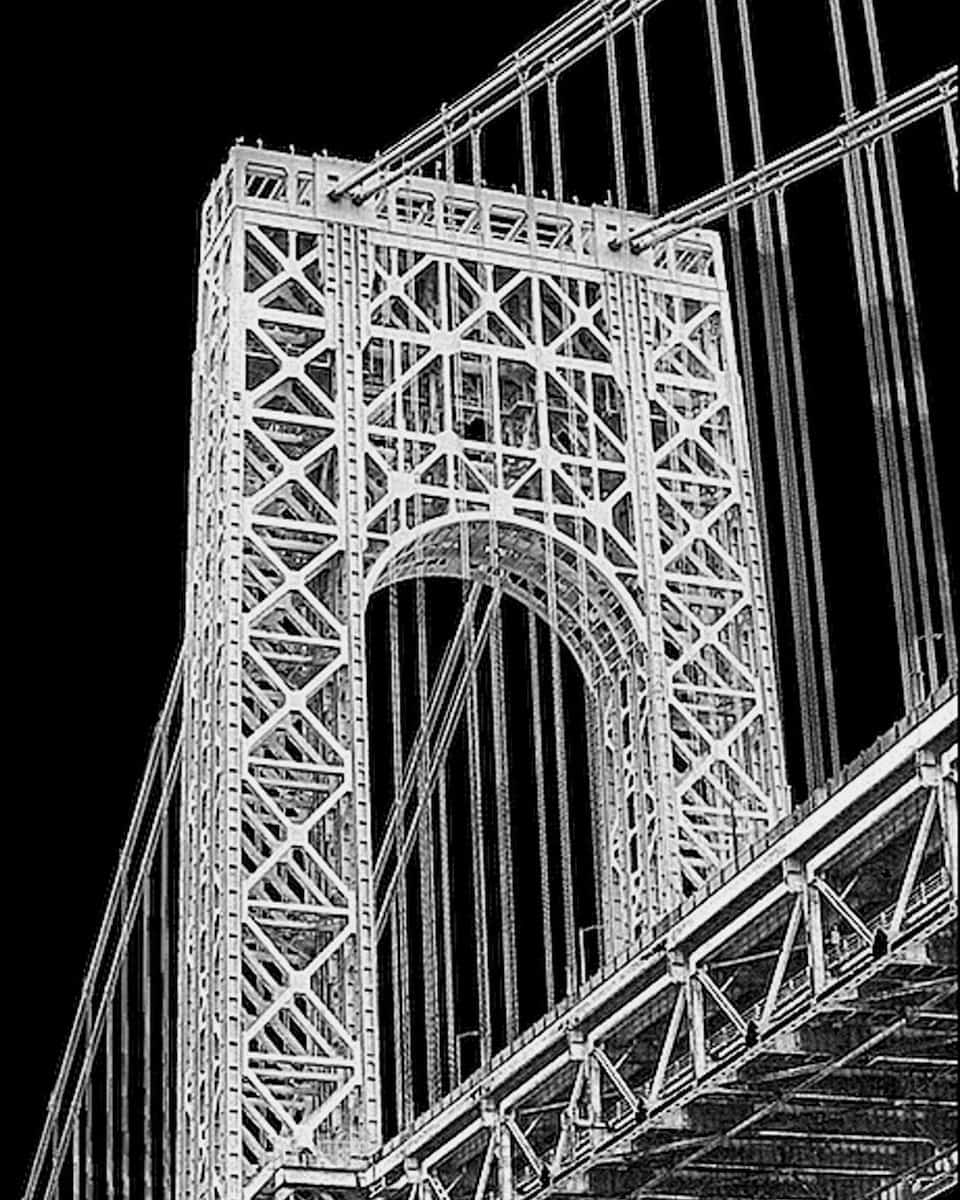
There are many opportunities for the adventurous photographer. I enjoy recording nature, architecture, cityscapes, and travel. Once the photo has been taken, there are many options. Frequently, I make minor adjustments in Photoshop and have the image printed on canvas. For this show, I chose to make the theme Black and White. Several images were significantly altered in Photoshop to create an artistic product that I felt fit with the theme. In this selection of four images, I created abstractions of the George Washington Bridge, an Osprey in Florida, Cement sculptures in the Cornell Arboretum, and an icicle hanging in my front window. Working with the various Photoshop filters, I am never sure of the product but I am often very pleased with it. I hope you also enjoy this group of photos and the March group show at the SOAG Gallery.

Treeforms

I find myself constantly intrigued by forms in nature. I find trees particularly fascinating. While each is easily identifiable by its morphology, they are all individually sculpted by their environment, resulting in their unique shapes and complexity.

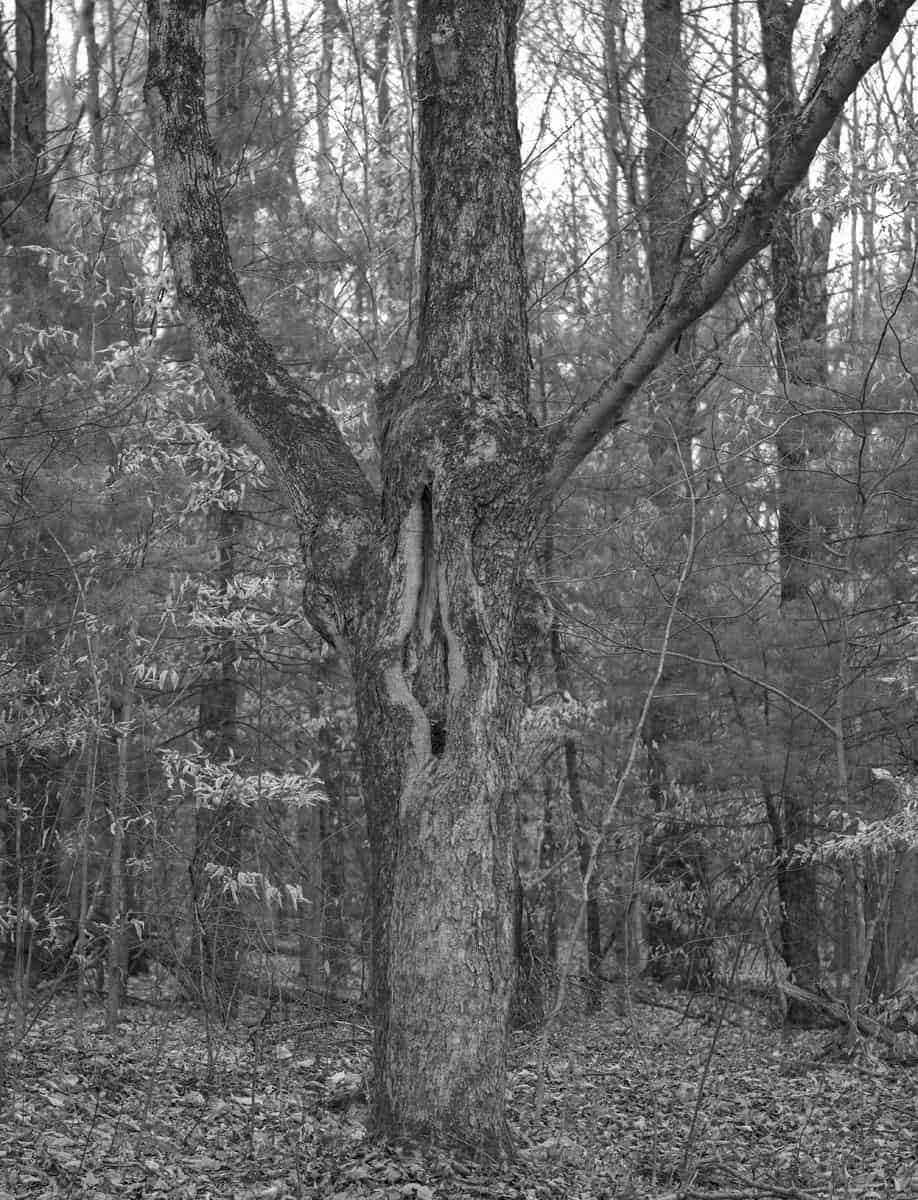
Sugar Maple: Old and Open

This sugar maple which appears to be reaching for the sky has grown along the road on the edge of our property for the entire 49 years we have lived on a hill in Caroline, NY. I have started to wonder how old it might be. My neighbor said my theory that it was alive in 19th century when a family named Payne lived in house nearby might be correct. He told me, “Back when horse drawn wagons and stage coaches were the main mode of transportation over land, there were financial incentives to landowners to plant sugar maples along roads.  I think … the payment was $20 per tree at some point in the second half of the 19th century. The rationale was that on hot summer days back when there was little forest around (remember that your land would have been completely cleared of forest north of the line of sugar maples along the road), the horses would benefit from shade.” 

When I look at this tree I see reaching limbs, an open trunk, and a past much longer than my short time as a steward of the land where it grows.

In my section of Six Visions I have honored trees, parts of trees, and occasional woodland surprises.

Two New Abstract Paintings

When fall turns to winter, I respond to the graphic contrasts of snow against dark backgrounds by painting abstracts in black and white. Actually I am using raw umber and pthalo blue In these. What prompts these paintings could be something I see in nature, in a small newspaper clipping, or glimpsed on TV in the set behind the characters. It could be something internal like a vivid dream or emotion that needs to be externalized. Or it could even be an intellectual question like how can I make a white square seem to float in space, in front of gray and black shapes. I influence the viewer’s perception of the space and volume within the canvas by manipulating the range and arrangement of lights and darks, soft or hard edges, shapes of different sizes. The goal is to entice the eye to move around all the parts of the composition. I chose these two paintings for this blog to show the stylistic extremes. Winter Grasses used a prompt from nature in combination with the idea of dividing a wide horizontal canvas with a series of vertical ovals and arches. The abstraction occurs when I use the underlying shapes of the natural scene, and leave out all the details that convey the identity of the objects. Unwelcome Intruders was prompted by a vivid nightmare. The figures are rendered loosely and indistinctly with gestural strokes, painting wet on wet, directly onto the white canvas without a pre-drawing, laying down a wash of gray and immediately painting over it, and continuing to paint into the wet with more layers, paint on top of paint, each layer informing the next with a little bit of its character. In this painting I introduced a third color – yellow ochre, in order to create a warmer gray. These paintings will appear at the State of the Art Gallery in March. I hope this little preview prompts you to see the rest of the exhibit in the gallery or online at soagannex.online

Aspens in Transition, 10/2008, Acadia National Park

I’ve been going to Acadia National Park since the fall of 2004 to photograph the foliage. Trees have been a huge part of my photographic interest since I first picked up a camera. Each year I go, I have a vision in my mind as to what and how I will be able to capture what mother nature offers in the way of fall color. She never disappoints even though the depth and range of color can vary greatly from year to year. For me, this image represents the transition most trees go through from spring and summer green to deep fall color.

“It’s not what you look at that matters, It’s what you see.” Henry David Thoreau