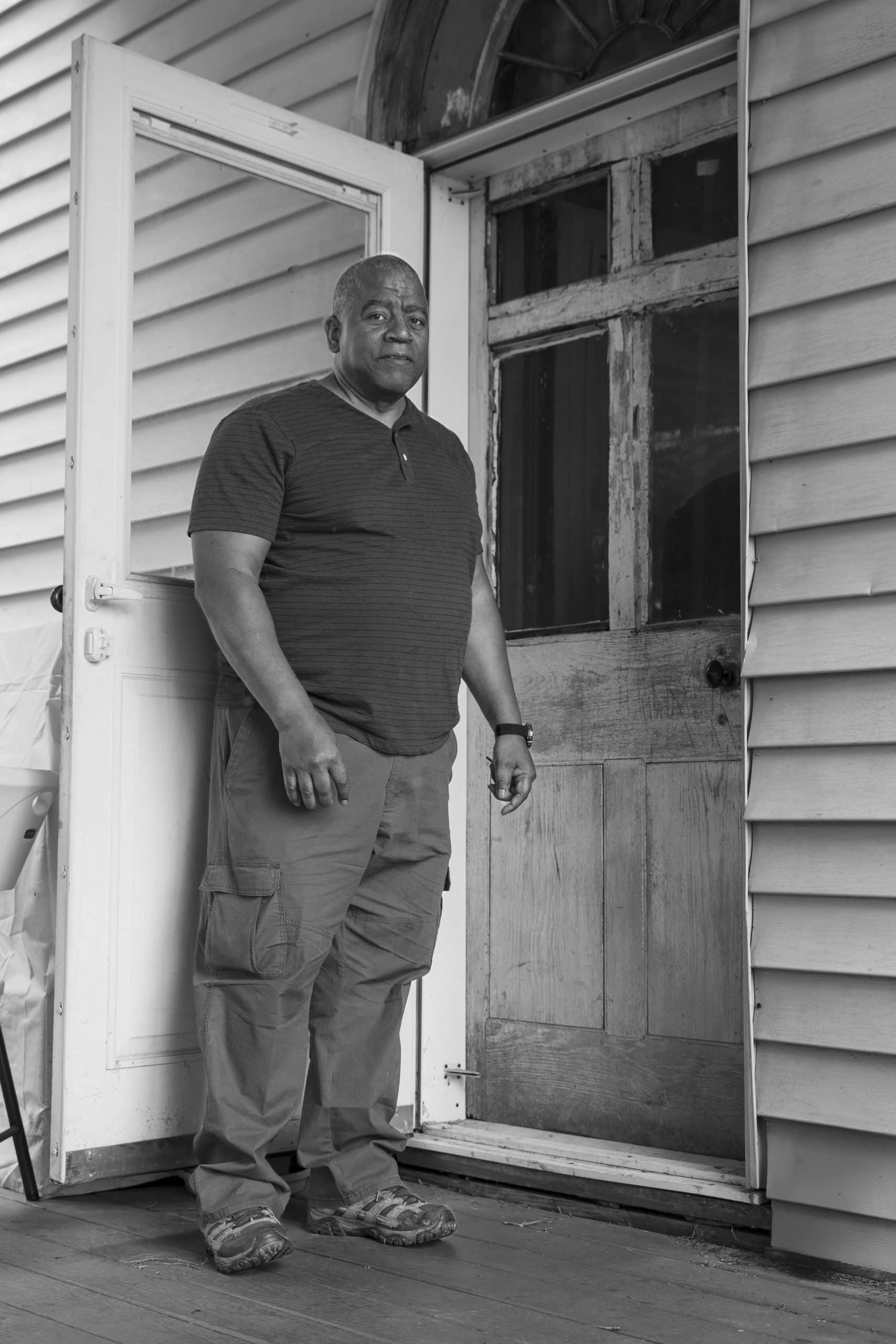
This door was part of the house when it was first built in the 1800s. The house used to belong to the Speeds. They sold it to my great-grandmother. Next it went to my father and then it came to me.
This is a wonderful place to live because it’s so peaceful. If I need help, the neighbors will come and help me. If they need help, they just call me. We don’t agree about everything, but who cares? People help each other. You don’t have to know which political party they’re in to help a person.
But, it’s gonna change here. Everything changes. You can see all the new houses popping up now. We’re changing too. In the pasture where we used to have horses we now have solar panels.
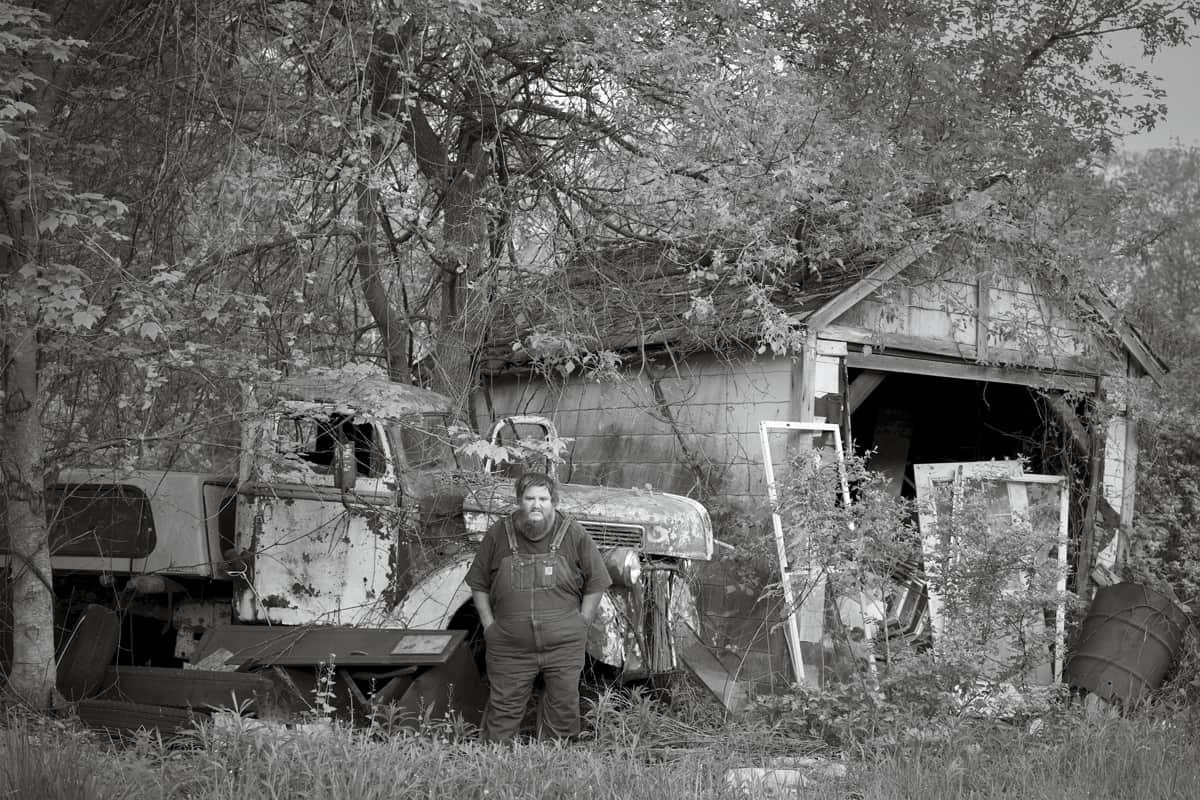
Nate explains how he got the truck: I had a blue 1969 Cougar convertible, standard—not automatic. About fifteen years ago a guy was driving by when I was working on the Hunter place. He got talking to me and he fell right in love with the car. He wanted to fix it up. He asked me what I wanted for it and I said, “I don’t know. I don’t really want to sell it.” He said, “I got something I could swap you for it.” I’ve always like to swap and barter with people. I’d rather have something in place of something instead of just to sell something and have me just blow the money. I could have sold the car for a couple hundred bucks, and just blew the money and never got nothing out of it. He wanted to swap it for an old Ford four-wheel drive F-500. I think it’s a ‘41 or ‘42. It’s got a flat head into it and a standard transmission. It’s a nice looking old truck. Now I still can drive by and still see that old truck.
Nate explains how he got the garage: Me and my father, Nathan Sr., moved that garage from the area around Fall Creek School in Ithaca, back in 1984 or ‘85. I was about 17. Dad had an advertisement in the Ithaca Journal and a lady called. The ad said we tore buildings down, but Dad wanted the garage for storage. We gave her a price on tearing it down and said, “You know we can jack that off the foundation and move it.” I said to Dad, “I’m game. I’ve never done it.” Dad said, “I have.” It was the first one I ever moved. We borrowed a couple house jacks from Norm Ted and Ithaca Renting. Norm moved houses for a living. We braced the garage up with some two-by-sixes and some two-by-eights and jacked it up right off the foundation. I think we used four jacks, one on each corner. We used Dad’s 1964 National 1600 series truck. It’s got an 18 foot bed in the back. We backed the truck underneath the garage and lowered it down. We strapped it to the frame with chains and binders. If you tried to do that now they would throw you right in jail. It took us about three, maybe four hours to get it on the truck and then brought it up here in about an hour. We backed it in, jacked it up and pulled the truck out. It was off the truck and right where it’s setting down. We had it all done by 3:00 in the afternoon.
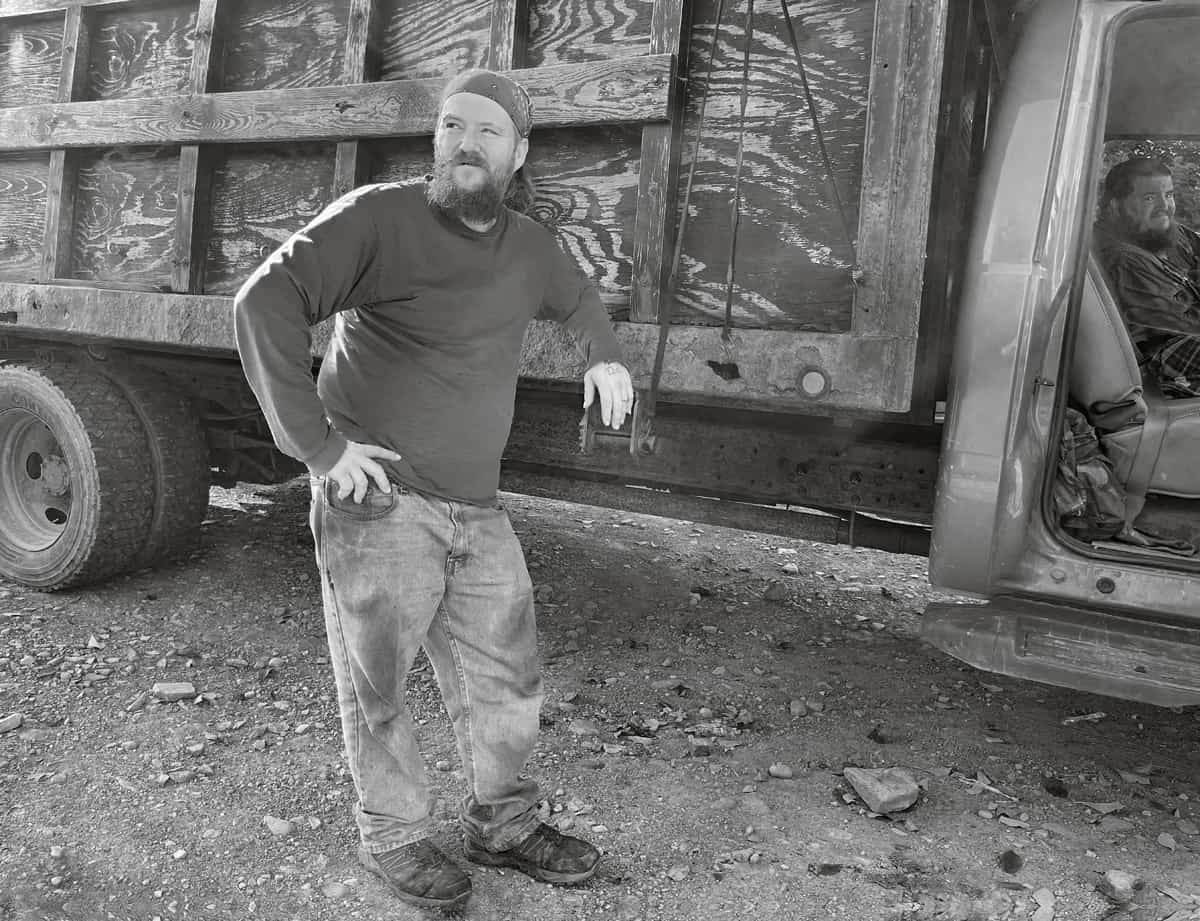
JT and Tim respond to the same question: When you think about living on our hill in Caroline, what comes to mind?
JT: The woodlands, the air, the atmosphere, the neighbors, family, friends, staying busy, working in the barn, taking care of my pigs, chickens, turkeys, my kids playing in the yard. I like sitting on my porch and watching the sunset. I like the trees.
Tim: I think of sitting on the porch. Seeing the trees and the garden. The breeze comes along. Pushes the leaves of the trees and the leaves turn and show their underside. There’s this noise—this sound of the wind gently brushing the leaves. I think of that too. My little porch. My little indoor outdoor space.
Twin-lens reflex camera: Preparing to make an exposure
Twilight
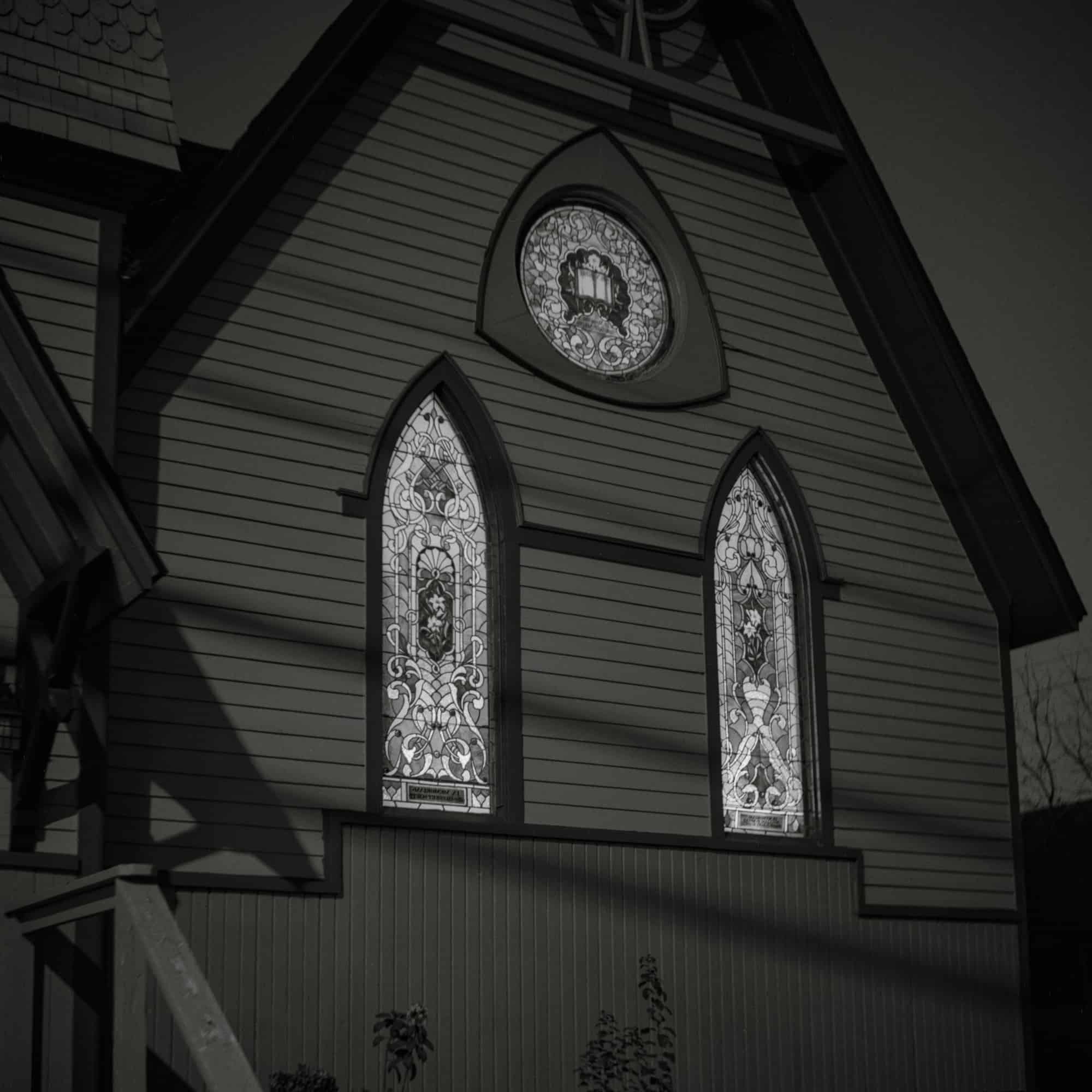
St. Thomas Episcopal Church, Slaterville Springs
I have been studying digital photography at Tompkins Cortland Community College every year since 2005. This past autumn I expanded my experience by working with film. With a medium format twin-lens reflex camera, borrowed from TC3, I spent the semester making photographs, one twelve-image roll of film at a time. Much of my time was spent remembering the settings I needed to make before taking each picture. First use a light meter (or an iPhone app) to measure the available light. Then set the preferred lens aperture (opening) for the exposure, set the time for an exposure at that aperture, focus the image, cock the shutter, release the shutter, and remember to wind the film before setting up for the next picture. I think I made every possible mistake, but practice helped. I learned how to develop the film, make prints in the darkroom, and scan negatives to edit and print digitally.
I took the pictures in this collection as a response to our final assignment: twilight photography. I chose places I know well. For a short period of time just after sundown, natural light and artificial light often complement each other. When I look at the photographs during what appears to be another spike of Covid, I see something else. The lights are still on.
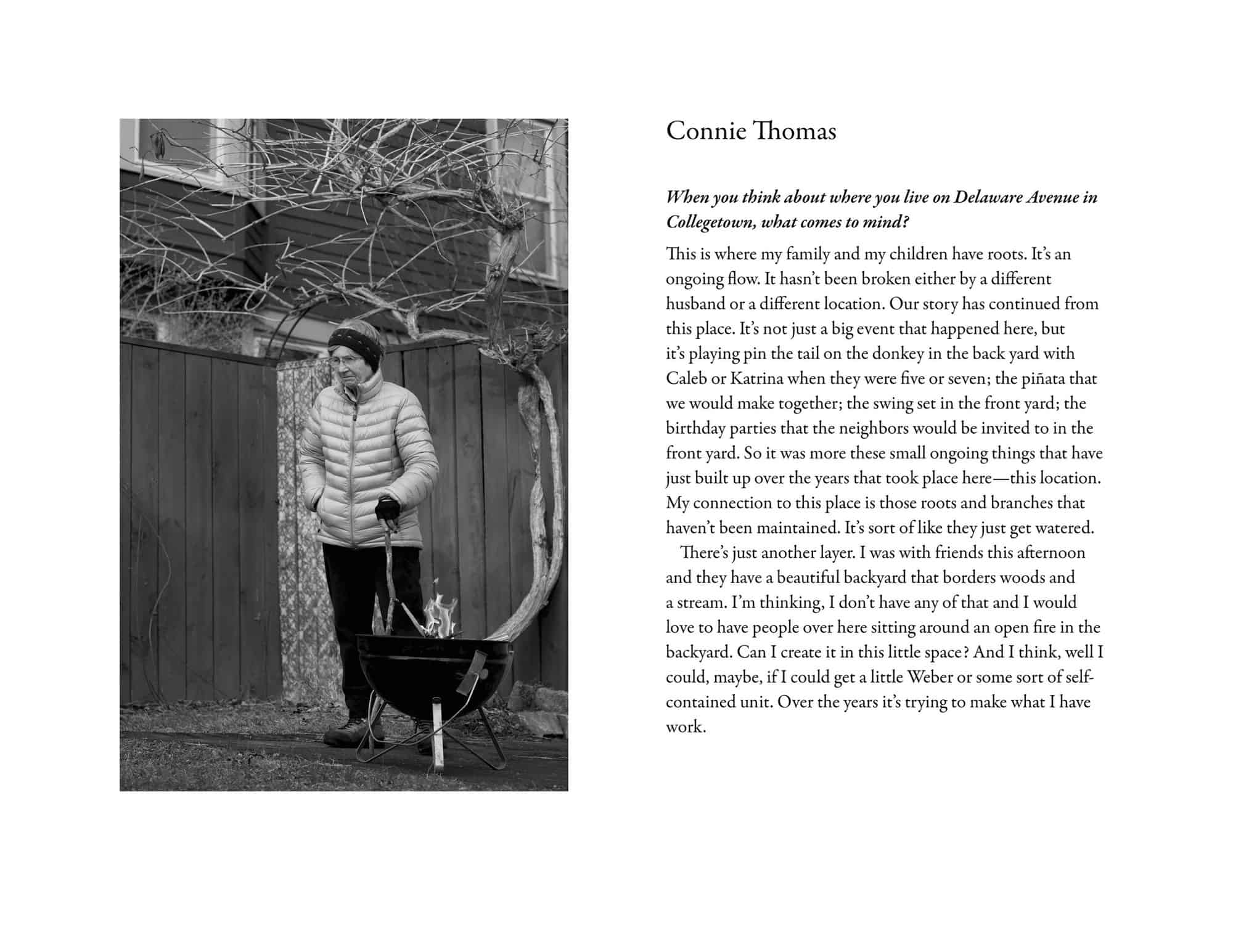
I have started a new project featuring the people on the hill where I live in the town of Caroline. Making portraits and collecting stories is out of my comfort zone, but I have wanted to to do this for the people on our hill for a long time. Now is the time to start. Connie doesn’t live on my hill. She lives on Delaware Avenue in Collegetown. But Connie and I are in the same photography class at Tompkins Cortland Community College. Connie is also patient as I fumble about with my camera and with the questions I ask to collect stories. I’m grateful to Connie for helping me build the skills and courage I need to go forward with this project.
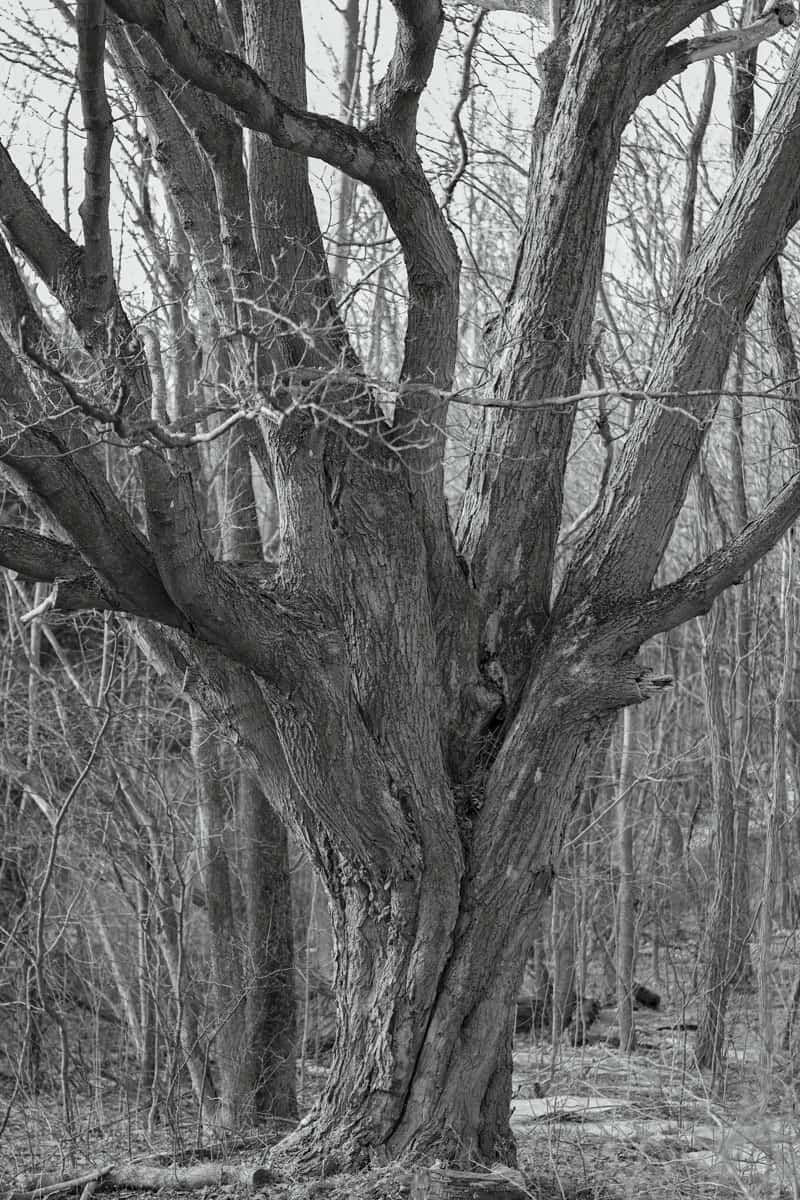
I took these photographs in two areas that aren’t very far apart near the top of Buffalo Road in Caroline, NY. I’m impressed by the adaptations the trees have made in response to where they are growing. The majestic maple has been growing on the edge of the woods in a clear area for a long time. The trees behind it are young. This tree has been alone in the sun for much of its life. Not far up the hill from this spot is a group of trees that are growing close together. It looks like they have been competing (or sharing) the sun for their entire lives.
This sugar maple which appears to be reaching for the sky has grown along the road on the edge of our property for the entire 49 years we have lived on a hill in Caroline, NY. I have started to wonder how old it might be. My neighbor said my theory that it was alive in 19th century when a family named Payne lived in house nearby might be correct. He told me, “Back when horse drawn wagons and stage coaches were the main mode of transportation over land, there were financial incentives to landowners to plant sugar maples along roads. I think … the payment was $20 per tree at some point in the second half of the 19th century. The rationale was that on hot summer days back when there was little forest around (remember that your land would have been completely cleared of forest north of the line of sugar maples along the road), the horses would benefit from shade.”
When I look at this tree I see reaching limbs, an open trunk, and a past much longer than my short time as a steward of the land where it grows.
In my section of Six Visions I have honored trees, parts of trees, and occasional woodland surprises.
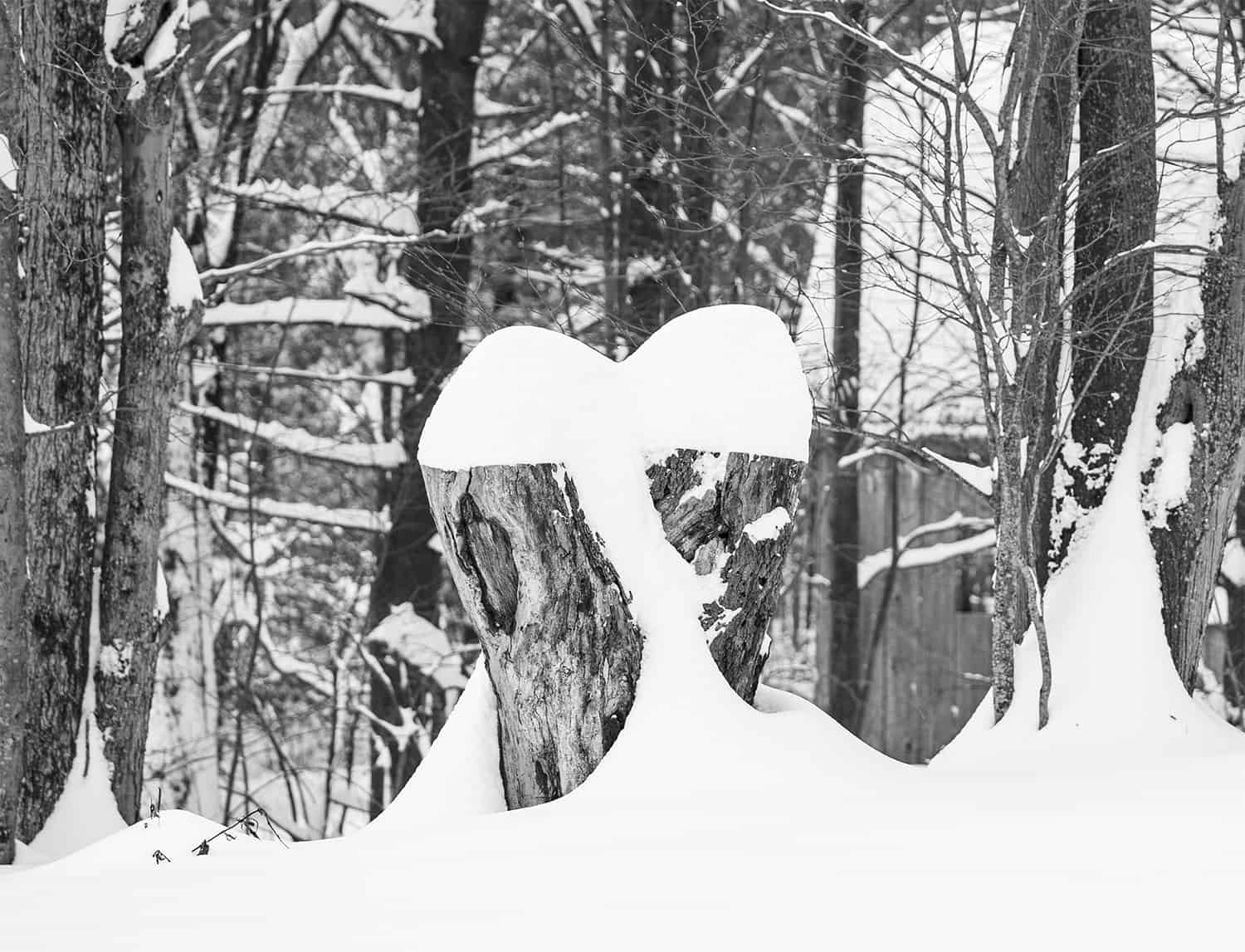
We have about two feet of new snow on our hill in Caroline. We’re waiting for a plow to clear a path to the garage and down the driveway. I shoveled the walkway by the front door and stepped out with my camera to capture the view of a favorite stump. My husband says it looks like a mushroom. Any other suggestions?
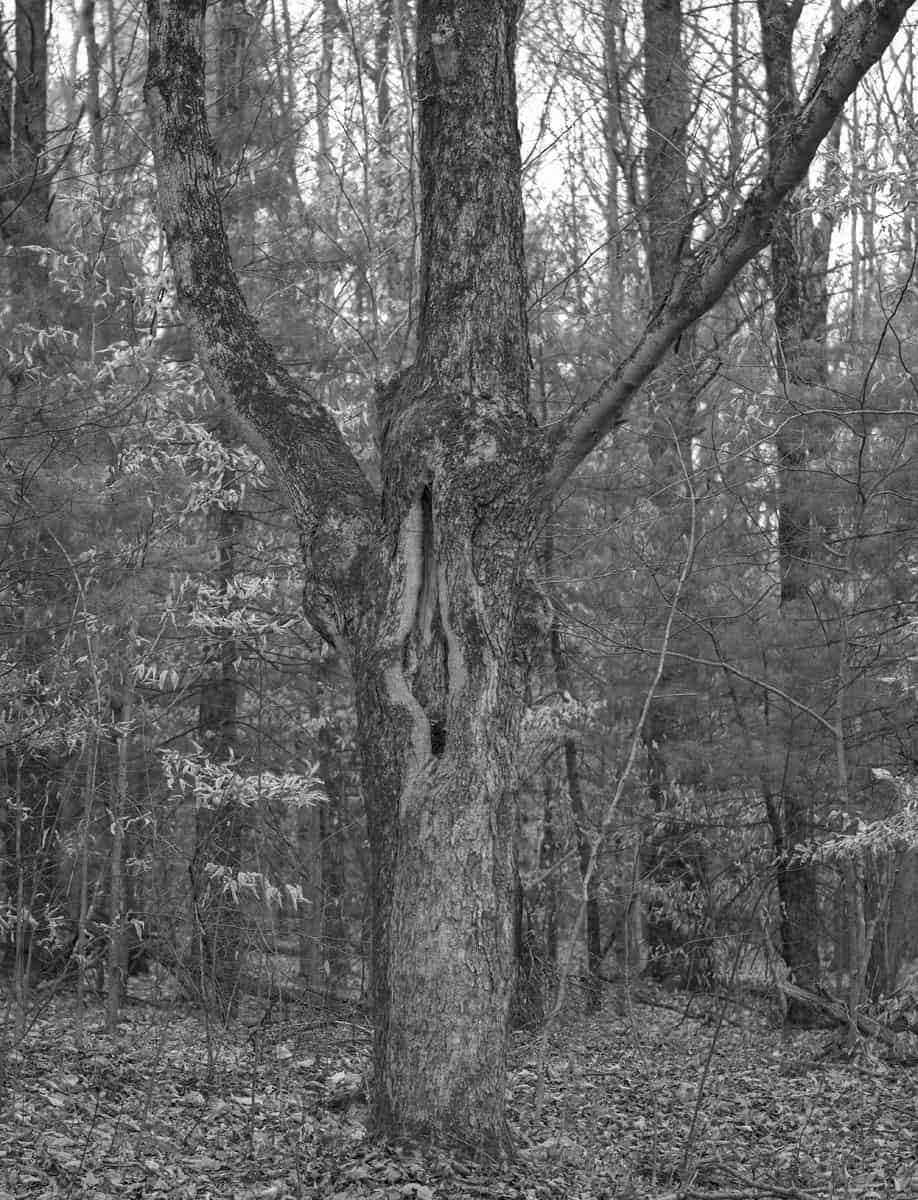
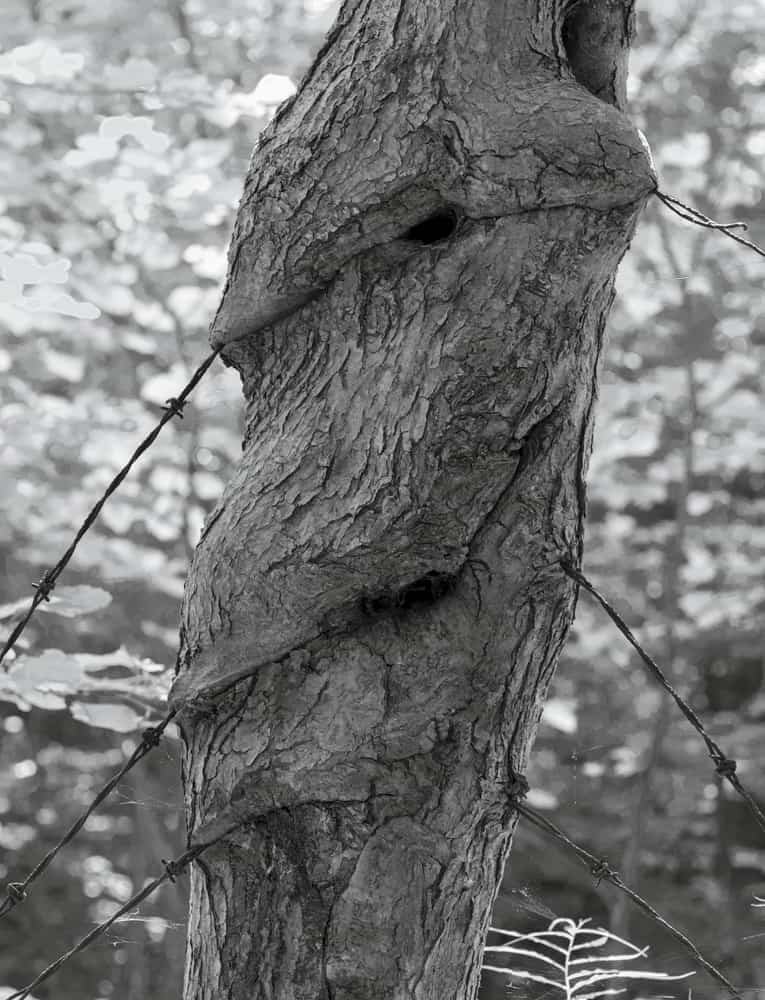
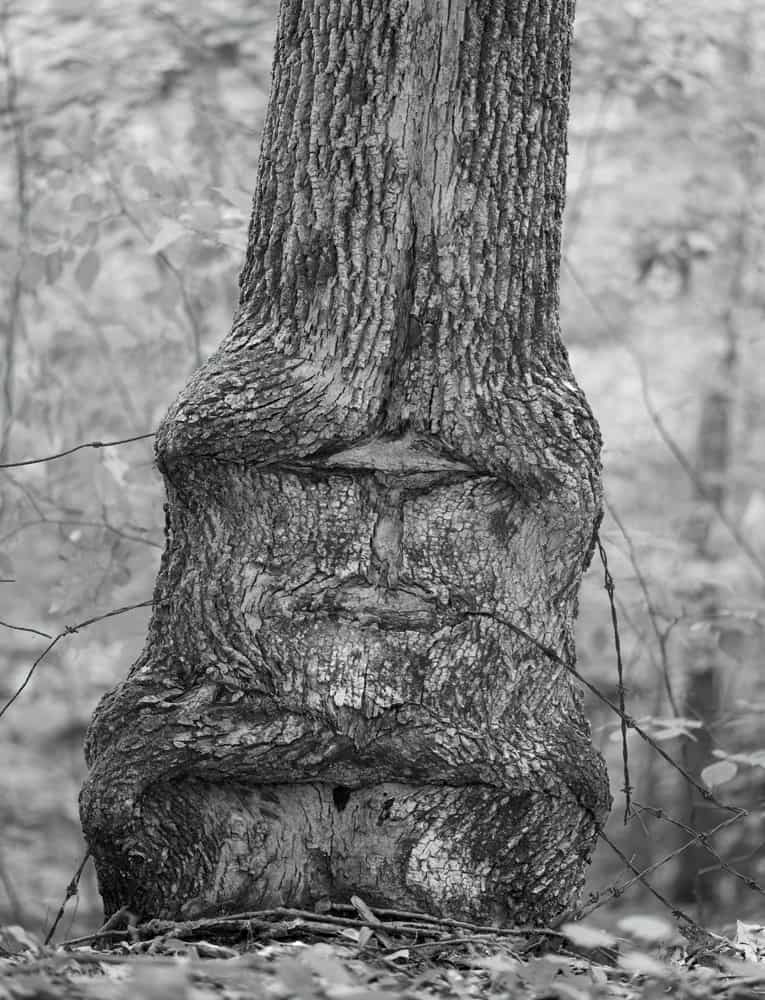
I would like to include one of these two photographs in an upcoming November exhibit at State of the Art Gallery. Both of these trees were once part of a fence. I started by choosing the East Side Tree, but am having second thoughts. What do you think? Which tree is more interesting? Which tree says something to the viewer? Is there another question I should be asking?
Last spring along a field not too far from home, I discovered a tree that was once part of an old barbed wire fence. The discovery opened a new exploration in the woods along the edge of the field. The top photograph in today’s post shows the tree I first discovered. It gradually enclosed the wire as it grew, and later died. The second photograph shows this tree and its immediate neighbor along the old fence line. The second tree enclosed the wire entirely. It’s still growing.
My question for anyone is, if I had to choose one photograph to include in a collection, which would it be? Or should I include both as part of a narrative? Thoughts and comments are welcome.